
No need to sparkle
intimacy as survival

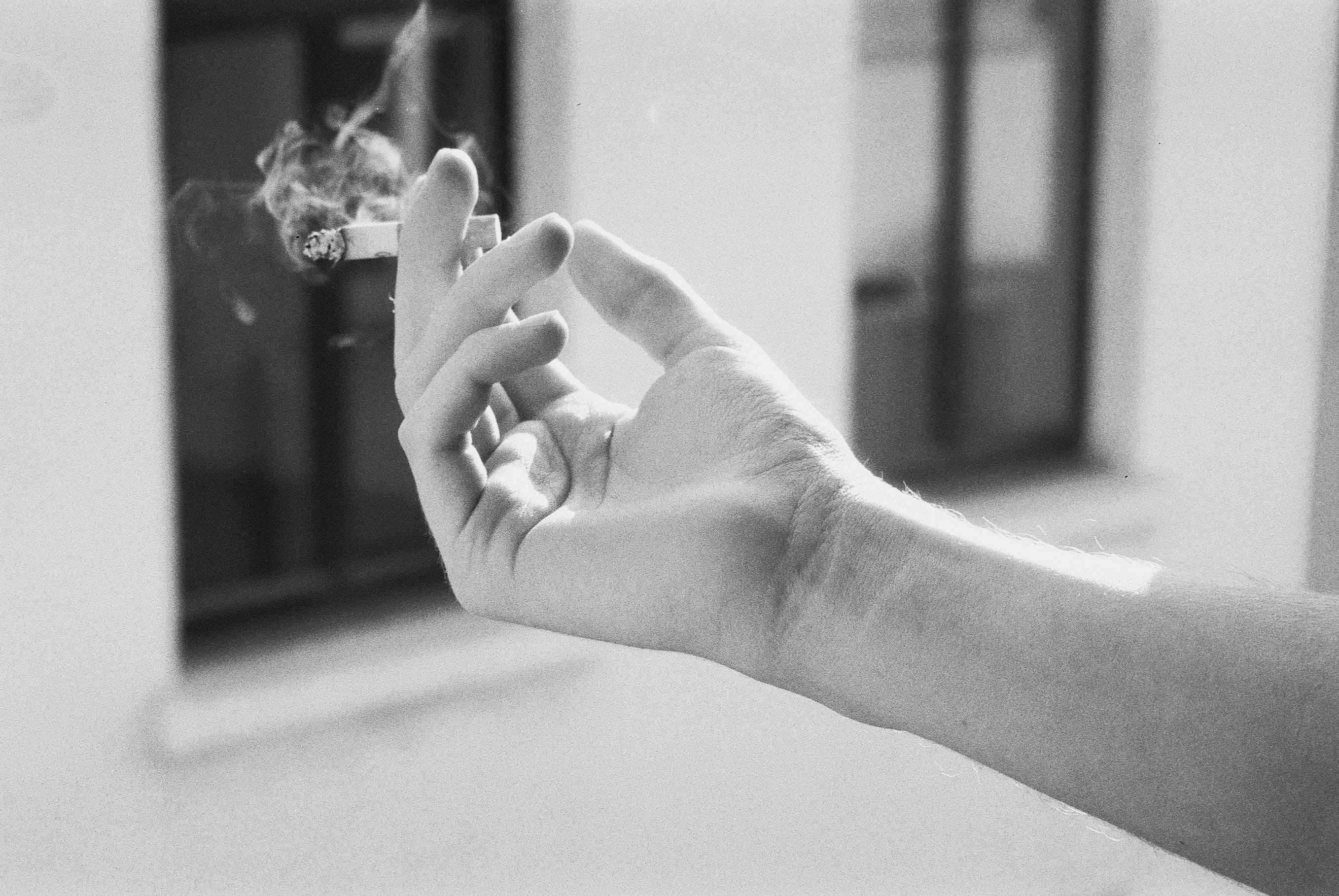
Daniel Smoking, Antwerp, 2019.
You say love is a shortcut, a way to get around meaning. You say love is a cheap trick, a charlatan. You say love is washed-up intimacy, a cold coffee cup forgotten in the microwave, waiting for someone to remember it. You say all of these things to me while I’m standing right there, begging you to accept it—the love. I beg, and I beg, and I beg. I plead. I say, don’t you see? Don’t you see the power in that?
Look at who held the invisible hand that rebuilt you from the inside, the one that fed you when you thought you’d only be loved again in death. Look who showed up. It was us—glittering gold, delicious, drunk on some abominable corner-shop nectar, wrapped in feathers and delusions of grandeur, ready to go out, to be so out there people either had to respect us or beat us up.
You say love doesn’t mean shit. You say it’s overused, overrun, a caricature of a once meaningful thing, a post-modern predicament. You know that feeling when you’re coming back from a trip and all you want to do is go home and sleep in your bed—except it’s not really your bed because you’re renting, London prices are getting insane, and in a few weeks another stranger will be fucking, eating, sleeping, working on it? You’re in the back of the cab and the driver asks if you’re excited to go home, and you don’t really know what to say because the place you typed into the app isn’t your home.
That home was me. That home was us, until you decided it wasn’t enough anymore.
When you say you don’t believe in love anymore, it’s an affront to centuries of us forming bonds to protect one another, to nurture, to care, to grow. Not romantic. Not born of fantasy. Born of survival.
I know love. I know it deeply and intimately. In all the people and ghosts who come back to haunt me, there is love. There was you, of course. There was Alex. But there was also Lariska. The Paris dilf. The Spanish guy who said I reminded him of his ex. And Henry, who understood everything.
Alex.
We developed a strange, sort-of relationship. We met occasionally—sometimes for a drink, sometimes to go to the BFI to see strange, experimental films because they were only £3 for under-25s, which we still were for a bit, thankfully. Then we’d go back to his place or mine: my little house in Lewisham or his Surrey Quays boat.
We always ended up talking for hours, about our Catholic childhoods, his Polish family, my ex-boyfriend, the illusory cruelty of gender, my distaste for sparkling water, his fragmented life growing up between oceans, how he hoped his ex might love him again in death, how I stopped eating until I got a text from him—a hunger strike for love. It did not work.
We were excruciatingly honest with each other. So honest it killed whatever romantic flame we’d been trying to cultivate.
This reminds me of a passage in A Room of One’s Own: “there was no need to sparkle, no need to be anybody but oneself.” He agreed. It was disarming.
We were always too tired or too busy, limbs weary, aching from the day’s demands, lips dried from all the talking. Slowly, silently, we stopped having sex. We would fall asleep encroaching on each other, holding on almost desperately, reaching for something still incomprehensible to me, something that surpassed bodily need.
I liked our intimacy. I liked stroking his chest, hairy like a pet, his moustache reminding me of a caterpillar. He seldom touched my breasts. Instead, he focused on the small of my back, my elbows, my Achilles heel, the crook of my knees. We still kissed sometimes. I liked burrowing my head into his neck, nibbling at his tender flesh.
I felt like a puppy adapting to new owners—how far can I push it? How much space can I take without protest?
I love the smell of sleepy men, I told him. Well, not that you’re a man—but you get it, right? It feels familiar. Like morning dew kissing grass on Easter mornings. Like mothers fighting their reflections in living-room mirrors before heading out.
He understood. He tolerated my ramblings, my deep inaptitude for life.
After that first time—when I fell asleep, and he didn’t come—we settled into this strange routine, never naming its queerness or peculiarity. It felt normal to exist this way together. On our third “date,” we agreed we wouldn’t seriously see each other. At first, I was taken aback—maybe even offended. Then I grew deeply grateful.
We didn’t demand anything from each other. There were no expectations. That felt strange, given how many roles I’d auditioned for, and how few I’d gotten. I’ve been so many things to so many people: wild and erotic, sensual witch, innocent girl, brooding, smoking French woman. But with him, just existing was enough.
There was no need to hurry.
No need to sparkle.
No need to be anybody but oneself.
Do you understand?